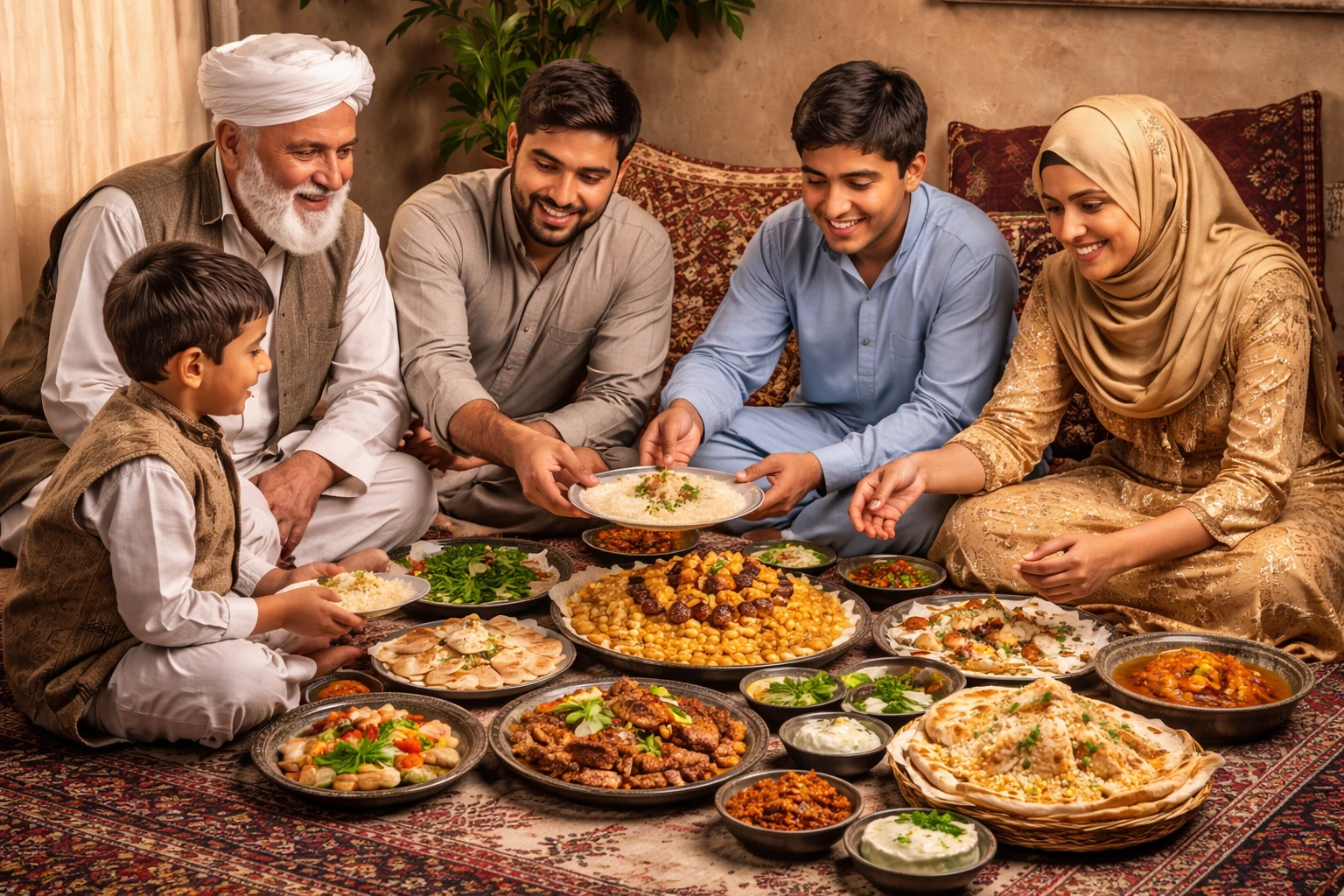
Traditional Afghan dishes are deeply connected to the country’s history, geography, and family life. Afghan cuisine is known for its balanced use of rice, bread, meat, vegetables, and dairy, prepared with simple techniques and mild spices. Rather than being spicy or heavily seasoned, traditional Afghan food focuses on rich flavor, texture, and nourishment.
Overview of Traditional Afghan Cuisine
Afghan cuisine developed over centuries through trade, regional diversity, and local agriculture. Meals are usually home-cooked and shared with family, reflecting values of hospitality and togetherness. While recipes vary by region, many traditional dishes are recognized across the entire country.
Rice-Based Traditional Dishes
Rice plays a central role in Afghan cuisine, especially in formal and traditional meals.
Kabuli Pulao
Kabuli Pulao is the most famous traditional Afghan dish and is often considered the national food. It is made with rice, meat, carrots, raisins, and aromatic spices, and is commonly served at weddings and special gatherings.
Qabuli-Style Plain Rice Dishes
In addition to Kabuli Pulao, simpler rice dishes served with stews or vegetables are also part of traditional meals, especially for family lunches and dinners.
Dumplings and Filled Dishes
Stuffed and steamed dishes are an important part of Afghan culinary tradition, especially in urban areas.
Mantu
Mantu are steamed dumplings filled with seasoned meat. They are typically topped with yogurt and tomato-based sauce and are often prepared for guests or special occasions.
Ashak
Ashak is similar to mantu but filled with leeks or herbs instead of meat. It is traditionally topped with meat sauce, beans, and yogurt and is closely associated with Kabul cuisine.
Bread and Flatbread Dishes
Bread is essential in Afghan food culture and is eaten with almost every meal.
Naan
Naan is the most common Afghan bread and is baked in traditional ovens. It is used to scoop food and often replaces utensils.
Bolani
Bolani is a stuffed flatbread filled with potatoes, pumpkin, leeks, or lentils. It is widely eaten as a snack, side dish, or street food.
Meat Dishes and Kebabs
Meat-based dishes are important in traditional Afghan cuisine, especially during celebrations.
Afghan Kebabs
Popular varieties include chapli kebab, shami kebab, and grilled lamb or beef skewers. Kebabs are usually served with bread and onions.
Slow-Cooked Meat Stews
Traditional stews made with meat, vegetables, and legumes are commonly eaten with rice or bread and are part of both daily and special meals.
Traditional Desserts and Sweets
Afghan cuisine also includes a range of traditional desserts, usually prepared for holidays and celebrations.
Common traditional sweets include:
- Samanak
- Haft Mewa
- Sheer Yakh (traditional ice cream)
- Goosh-e-Fil
These foods are often associated with cultural and religious events.
Regional Differences in Traditional Dishes
Traditional Afghan dishes vary by region. Northern areas often use more rice and dairy, while eastern and southern regions rely more on bread-based meals. Despite these differences, many core dishes are shared nationwide.
Conclusion
Traditional Afghan dishes reflect simplicity, hospitality, and cultural continuity. Foods such as Kabuli Pulao, mantu, ashak, bolani, naan, and kebabs form the foundation of Afghan cuisine. Together, they offer a clear picture of Afghanistan’s food traditions and the role food plays in everyday life and special occasions.




No Comments