Music and arts in Afghanistan are deeply connected to history, regional identity, and cultural expression. For centuries, Afghans have used music, poetry, crafts, and visual arts to preserve traditions, tell stories, and express emotions. While public artistic activity has faced restrictions in recent years, cultural forms continue to exist in private settings, rural communities, and traditional practices.
Insights from Pashto and Dari cultural sources show that Afghan arts are diverse, regionally rooted, and closely tied to daily life.
Traditional Afghan Music
Traditional Afghan music is based on regional styles, folk melodies, and classical influences. Music has historically been performed at weddings, family gatherings, and cultural celebrations.
Common themes include love, separation, faith, nature, and moral reflection. Songs are often passed down orally from one generation to the next.
Musical Instruments
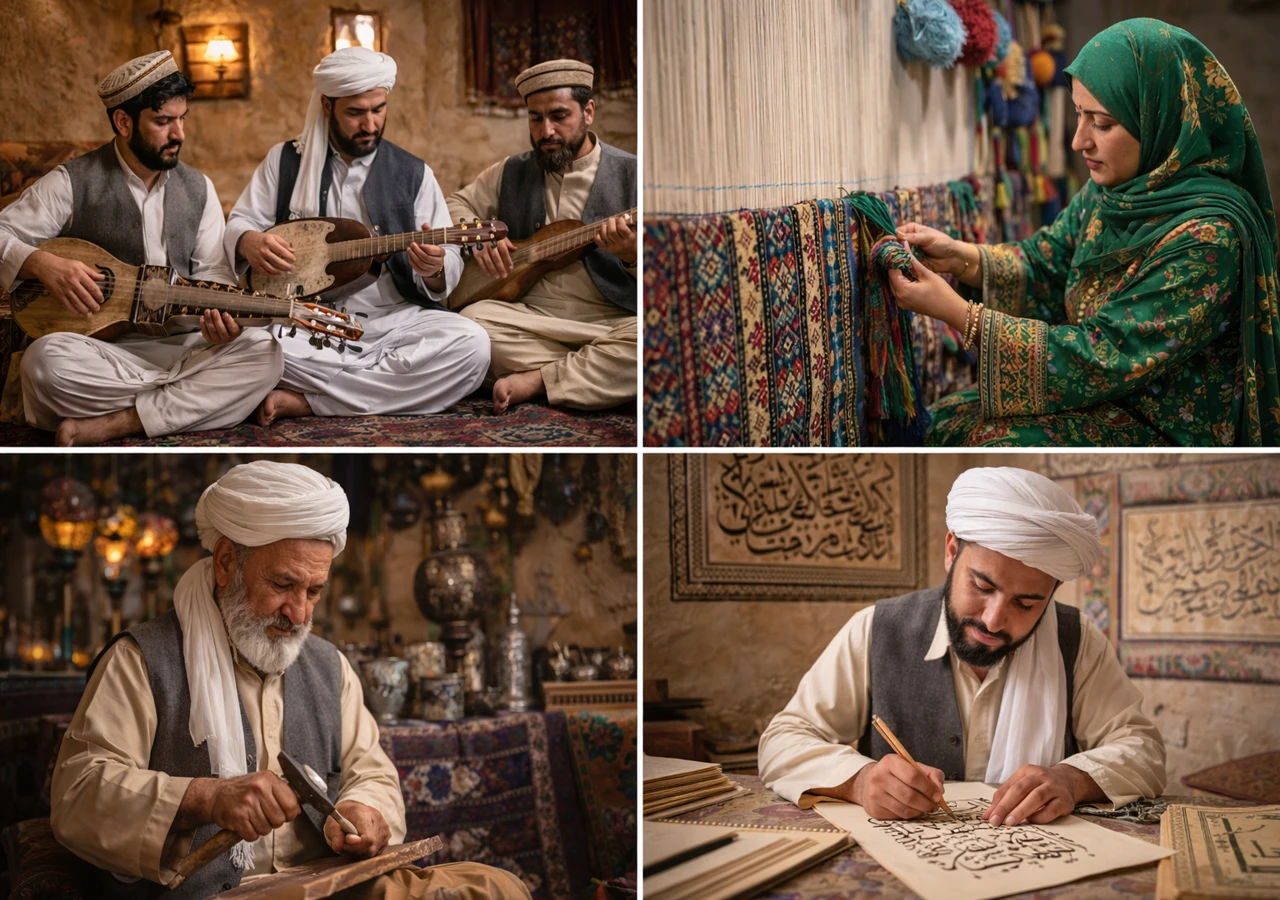
Several traditional instruments are widely recognized in Afghan culture. String instruments, drums, and wind instruments are central to folk and classical music.
Music styles and instruments vary by region, with each area maintaining its own sound and rhythm.
Folk and Regional Music Styles
Afghanistan’s ethnic and regional diversity is reflected in its music. Each region has distinct rhythms, vocal styles, and performance traditions.
Folk music is especially important in rural areas, where it accompanies storytelling, poetry recitation, and seasonal celebrations.
Poetry and Oral Arts
Poetry holds a special place in Afghan culture. In both Pashto and Dari traditions, poetry is considered a respected art form and a sign of education and cultural awareness.
Poems are often recited rather than written, and many Afghans memorize verses that express wisdom, emotion, and moral values.
Visual Arts and Handicrafts
Afghan visual arts are strongly connected to craftsmanship. Carpet weaving, embroidery, pottery, wood carving, and metalwork are among the most important traditional art forms.
These crafts are often produced within families and communities, combining artistic expression with practical use and economic survival.
Calligraphy and Decorative Arts
Calligraphy has historically been an important artistic practice, especially in religious and educational contexts. Decorative patterns and geometric designs are commonly used in architecture, textiles, and manuscripts.
These art forms emphasize balance, repetition, and symbolic meaning.
Music and Arts in Daily Life Today
Today, music and arts are more commonly practiced in private spaces, homes, and small community settings. While public performances are limited, cultural traditions continue through family teaching, local craftsmanship, and oral transmission.
Arts remain a key part of Afghan identity, even when they are less visible.
Preservation of Cultural Heritage
Despite challenges, Afghans continue to preserve their musical and artistic heritage. Families, elders, and artisans play a central role in passing knowledge to younger generations.
This cultural continuity helps maintain a sense of identity and connection to the past.
Final Notes
Music and arts in Afghanistan reflect the country’s rich cultural history, regional diversity, and strong oral traditions. Rooted in Pashto and Dari culture, Afghan music, poetry, and crafts continue to shape identity and daily life, even under restrictive conditions. Understanding these art forms offers a deeper and more human view of Afghan society.



No Comments