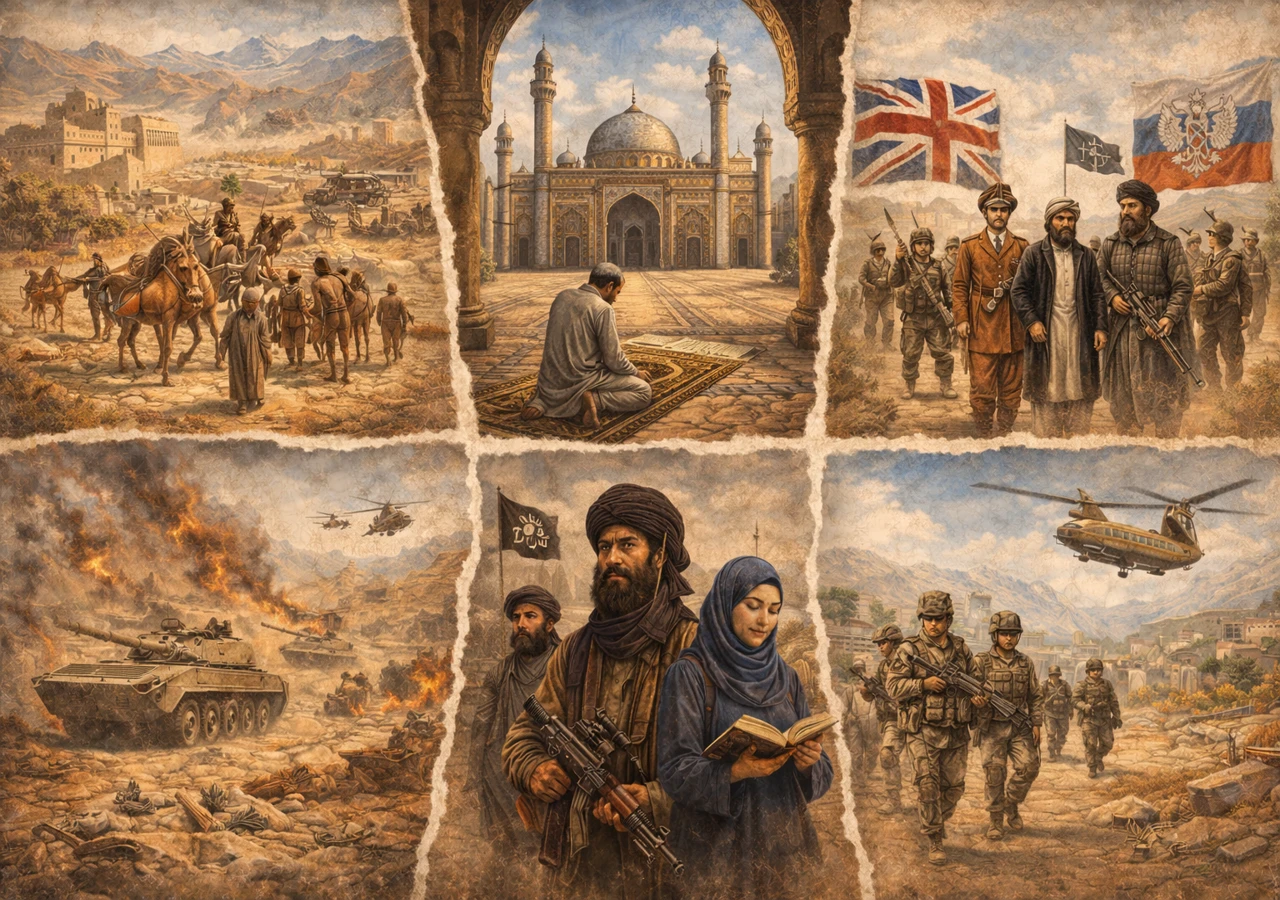
Afghanistan’s history is marked by key events that shaped its political structure, society, and relationship with the outside world. From ancient civilizations to modern conflicts, these moments influenced how Afghanistan developed and how it is understood today. The country’s past reflects both repeated disruption and long-term resilience.
Identifying the most important events helps explain Afghanistan’s modern challenges and cultural continuity.
Ancient Civilizations and Early Trade Routes
Afghanistan was home to early human settlements and ancient civilizations that benefited from its position along major trade routes. These routes connected East Asia, Central Asia, and the Middle East, bringing cultural exchange, economic activity, and early urban development.
This period established Afghanistan as a crossroads of civilizations.
Spread of Islam
The arrival and spread of Islam transformed Afghan society, law, and culture. Islamic beliefs became central to governance, education, and daily life.
This event shaped Afghanistan’s identity and continues to influence social values today.
The rise of Afghan-led kingdoms marked the emergence of a distinct Afghan political identity. Local rulers gained control over territory and reduced foreign influence.
This period strengthened ideas of sovereignty, independence, and local governance.
Afghanistan as a Buffer State
In the nineteenth century, Afghanistan became a buffer state between major empires. Its borders were shaped during this era, and the country worked to maintain independence while balancing external pressure.
This status influenced Afghanistan’s cautious approach to foreign involvement.
Afghanistan achieved full independence in the early twentieth century. Efforts were made to modernize institutions, education, and infrastructure while preserving tradition.
These reforms created tension between change and cultural continuity.
Soviet War in Afghanistan
The Soviet military intervention was one of the most impactful events in modern Afghan history. The war caused widespread destruction, mass displacement, and long-term instability.
Its consequences affected generations and reshaped Afghanistan’s political landscape.
Civil War After the Soviet Withdrawal
After the Soviet exit, internal conflict intensified. Competing groups fought for power, leading to lawlessness, economic collapse, and social fragmentation.
This period deeply weakened state institutions.
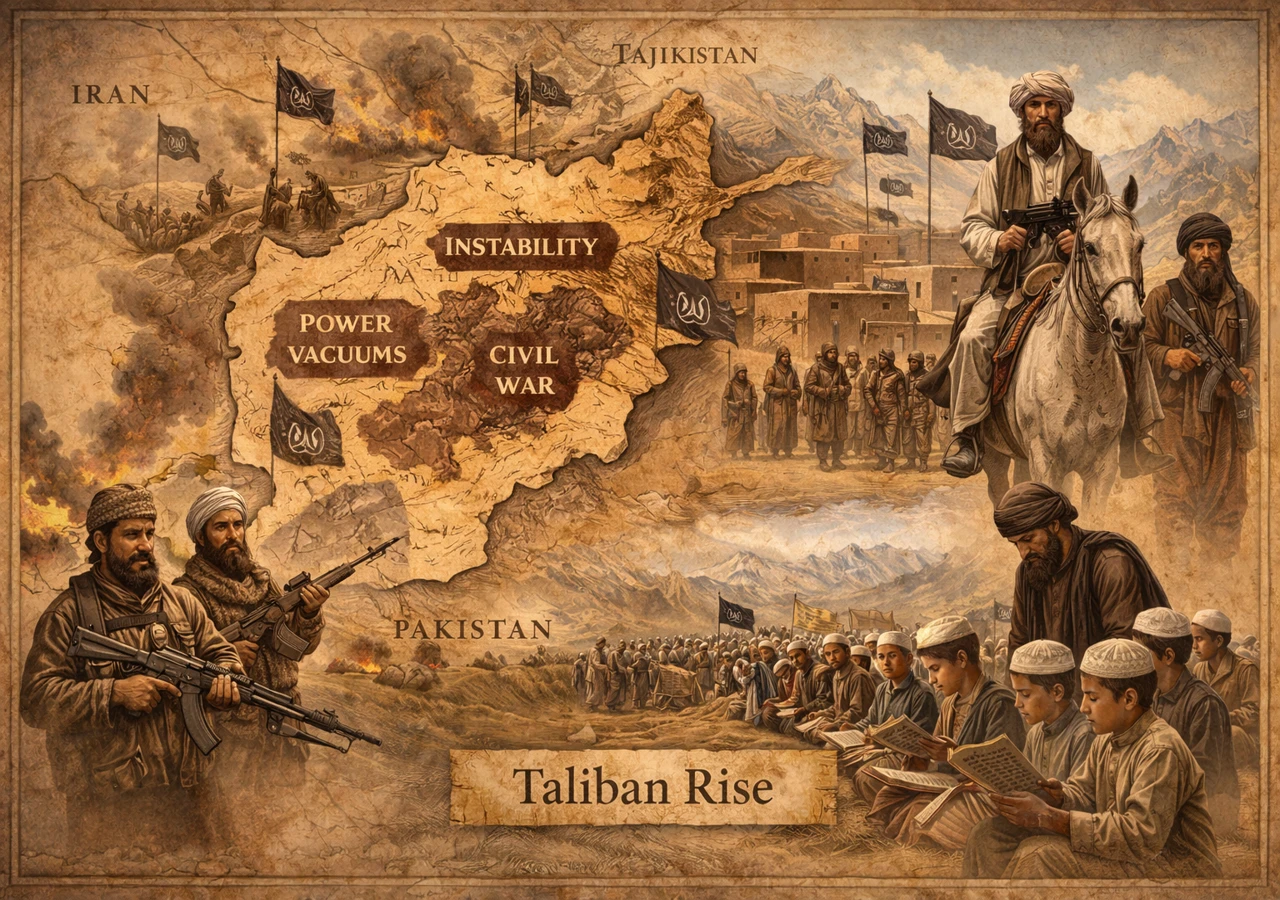
Rise of the Taliban
The Taliban emerged during the civil war, promising order and security. Their rise marked a major shift in governance and social policy.
This event changed Afghanistan’s internal structure and international relations.
United States Intervention
The U.S.-led intervention began in the early twenty-first century in response to global security concerns. It led to long-term foreign presence, institutional rebuilding efforts, and continued conflict.
The intervention shaped Afghanistan’s recent political and social experience.
Recent Political Changes
Recent changes in governance marked another turning point in Afghan history. Security conditions improved in many areas, while economic challenges and social restrictions increased.
Afghanistan entered a new phase shaped by past experiences and present realities.
Final Notes
The most important events in Afghan history include ancient trade development, the spread of Islam, state formation, foreign interventions, and modern conflicts. Together, these events shaped Afghanistan’s identity, resilience, and relationship with the world. Understanding them provides essential context for Afghanistan’s present-day society and challenges.



No Comments