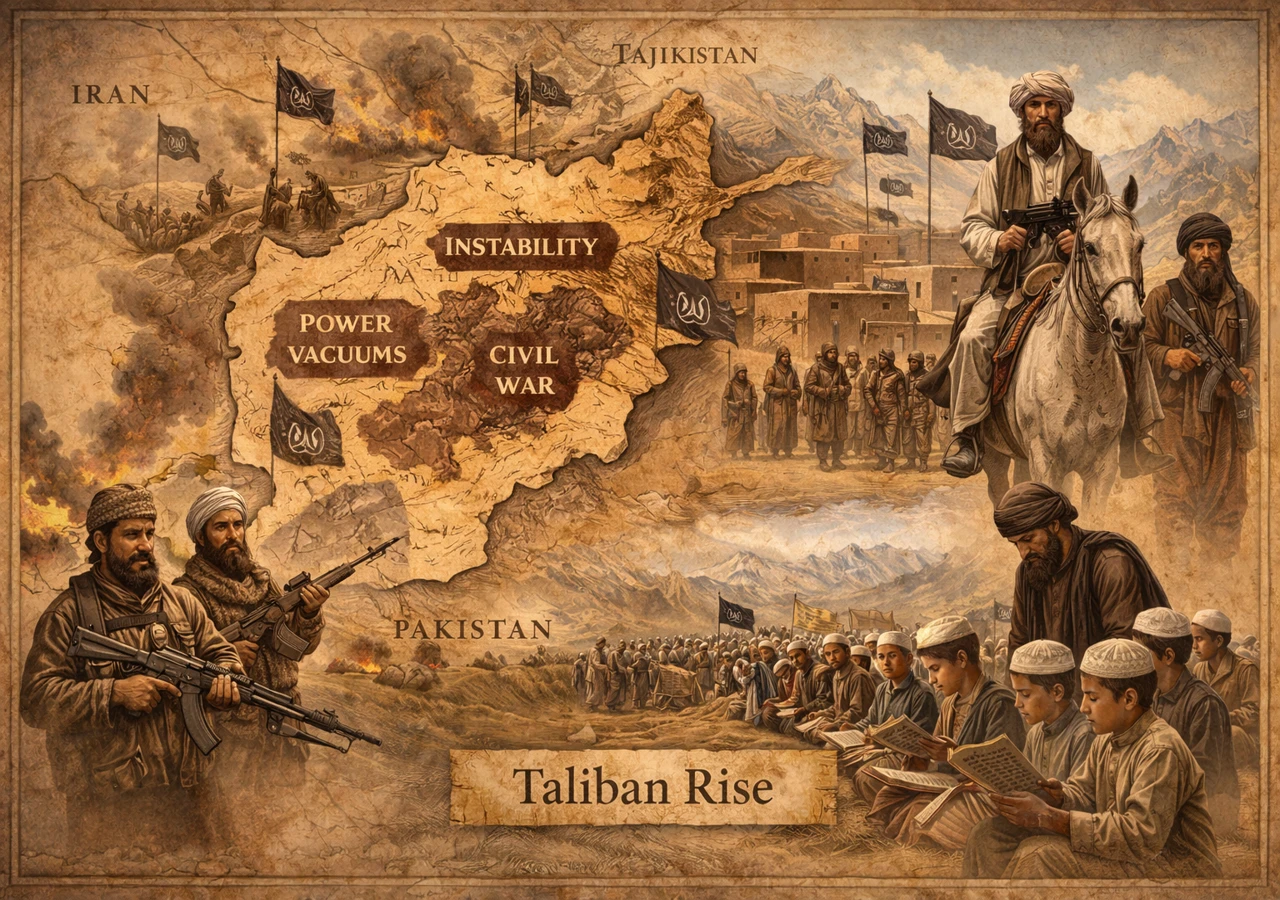
The rise of the Taliban in Afghanistan was shaped by years of conflict, political collapse, social disorder, and regional dynamics. Emerging in the mid-1990s, the movement grew rapidly by presenting itself as a force promising security, justice, and stability at a time when Afghanistan was deeply fragmented after decades of war.
Understanding how the Taliban rose requires examining the conditions that existed after the Soviet war and during the civil conflict that followed.
Aftermath of the Soviet War
Following the Soviet withdrawal, Afghanistan entered a period of severe instability. Central authority weakened, armed groups controlled different regions, and violent competition among factions became widespread.
Daily life was marked by insecurity, roadblocks, looting, and the breakdown of basic governance, especially in southern and eastern regions.
Civil War and Power Vacuums
The collapse of the previous government led to intense fighting among rival groups. Major cities and trade routes became battlegrounds, and civilians suffered from lawlessness and economic collapse.
These conditions created power vacuums in many areas, where no single authority could provide security or enforce order.
Emergence of the Taliban Movement
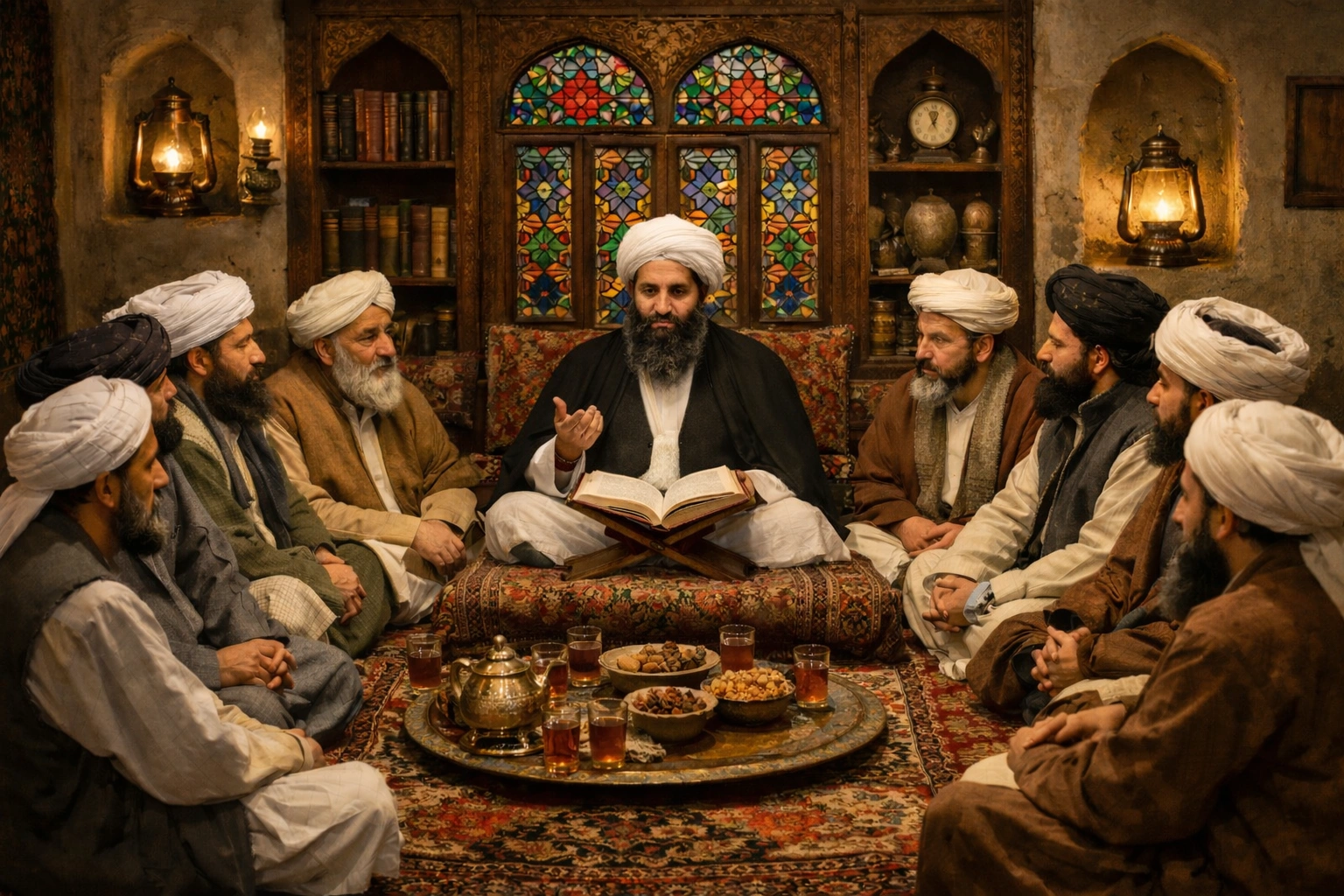
The Taliban emerged from religious schools in southern Afghanistan, largely composed of young men shaped by years of war and displacement. The movement initially focused on restoring order, disarming fighters, and enforcing strict discipline.
Its early message emphasized ending corruption, improving security, and applying religious law consistently.
Public Support in Early Stages
In its early phase, the Taliban gained local support in areas where people were exhausted by violence and instability. The promise of safer roads, reduced crime, and predictable authority appealed to many communities.
This support helped the movement expand quickly across large parts of the country.
Military Expansion and Control
As the Taliban grew, it captured key cities and trade routes. Its rapid expansion was supported by effective organization, access to resources, and the weakness of rival groups.
By the late 1990s, the Taliban controlled most of Afghanistan.
Governance and Rule
Once in power, the Taliban established a centralized system based on strict interpretations of religious law. While security improved in some areas, social restrictions increased significantly, affecting daily life, education, and employment.
Governance focused more on control and enforcement than on institutional development.
International Context and Isolation
The Taliban government faced limited international recognition and economic isolation. Sanctions and lack of formal engagement further constrained the country’s economy and institutions.
These pressures shaped how the movement governed and interacted with the outside world.
Long-Term Impact of the Rise
The rise of the Taliban changed Afghanistan’s political and social trajectory. It reshaped governance, affected regional relations, and influenced later conflicts.
The movement’s origins remain closely tied to the instability and power struggles of the post-Soviet period.
Final Notes
The Taliban rose in Afghanistan due to prolonged instability, civil war, weakened institutions, and widespread demand for order after years of conflict. Their emergence was less a sudden event and more a result of deep structural conditions created by decades of war and political collapse. Understanding these factors provides important context for Afghanistan’s modern history.



No Comments