Politics in Afghanistan has a direct and indirect influence on daily life across the country. Political decisions shape security conditions, economic opportunities, access to services, and social rules. While many Afghans focus on everyday survival and family responsibilities, political structures still affect how people work, travel, study, and interact with institutions.
Understanding this influence helps explain how governance connects to ordinary life.
Security and Freedom of Movement
Political authority strongly affects security conditions. Changes in governance have reduced large-scale fighting, which has improved safety on roads and in many urban areas.
At the same time, rules on movement, checkpoints, and enforcement influence how freely people can travel for work, education, or family needs.
Economic Conditions and Employment
Political decisions affect banking access, trade, and international engagement, which directly influence jobs and income. Restrictions on financial systems and reduced foreign involvement have limited economic growth.
Many households rely on informal work, small trade, or agriculture due to limited formal employment opportunities.
Access to Education
Politics plays a major role in determining who can access education and under what conditions. Policy decisions influence school operations, curriculum, and attendance rules.
These changes shape long-term opportunities for families and future generations.
Healthcare and Public Services
Political systems affect funding, staffing, and operation of healthcare and public services. While basic services continue in many areas, shortages of resources and trained staff remain common.
Access to healthcare often depends on location, local administration, and support from humanitarian organizations.
Social Rules and Daily Behavior
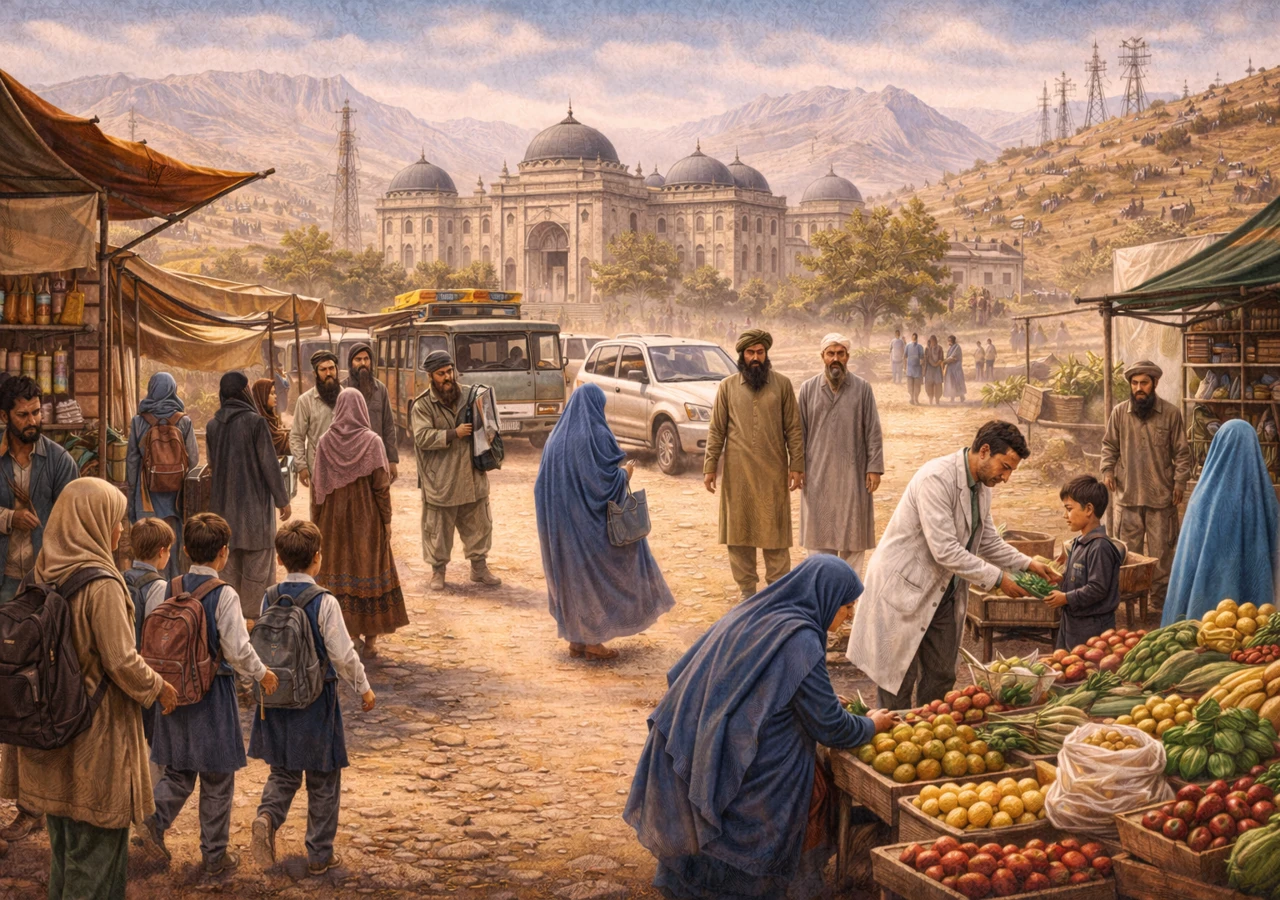
Political authority influences social regulations that shape daily behavior, dress, work participation, and public interaction. People adjust routines to comply with local rules and expectations.
These regulations affect how individuals plan their daily activities and social lives.
Political conditions influence what information is available and how people receive news. Media operations, communication channels, and public discussion are shaped by regulatory environments.
Many Afghans rely on informal networks and community communication to stay informed.
Family and Community Adaptation
Families play a key role in adapting to political conditions. Decisions are often made collectively to manage risk, income, and education.
Community support helps people cope with uncertainty and change.
Differences Between Urban and Rural Life
Political impact is experienced differently in cities and rural areas. Urban residents are more directly affected by administrative rules and service availability, while rural communities rely more on local structures.
This creates varied daily experiences across regions.
Final Notes
Politics affects daily life in Afghanistan through security, economic opportunity, access to services, and social rules. While improved security has brought some stability, economic challenges and regulatory limits continue to shape everyday routines. Understanding this connection highlights how political decisions influence ordinary life, even when people focus primarily on family and survival rather than politics itself.



No Comments