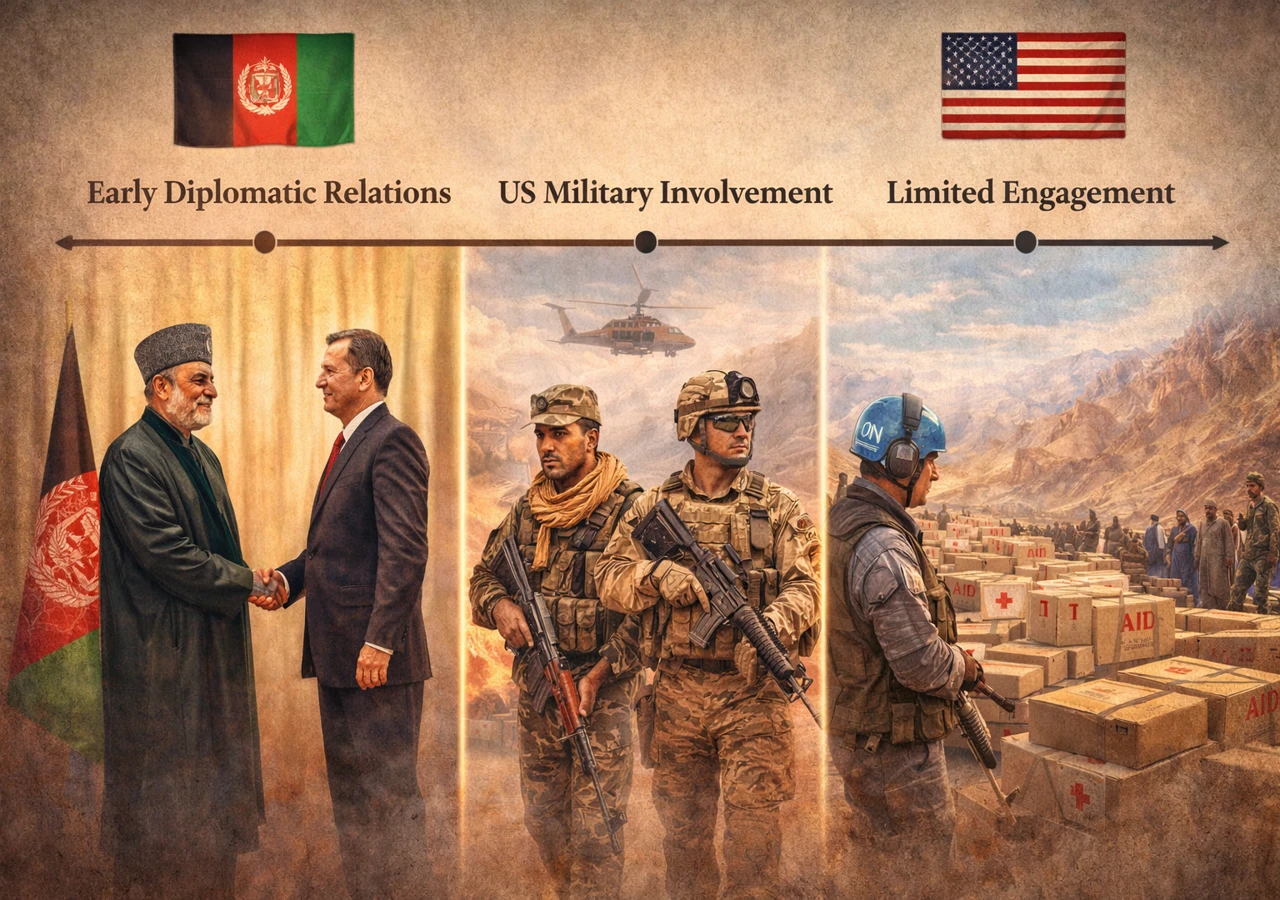
Afghanistan’s relationship with the United States has changed significantly over time. It has included periods of cooperation, conflict, long-term military involvement, and limited engagement. Today, the relationship is shaped by past experiences, security concerns, humanitarian issues, and cautious diplomatic interaction.
Understanding this relationship requires looking at its historical phases and how they influence current realities.
Early Diplomatic Relations
Afghanistan and the United States established diplomatic relations in the twentieth century. Early interaction focused on development assistance, education, and limited economic cooperation.
During this period, the relationship was relatively neutral and non-confrontational.
Cold War Period
During the Cold War, Afghanistan became strategically important due to global competition between major powers. The United States became indirectly involved during the Soviet War in Afghanistan by supporting resistance efforts.
This period marked a shift from neutral engagement to strategic involvement.
Post-2001 Military Intervention
The relationship changed dramatically after 2001, when the United States led a military intervention in Afghanistan following international security concerns. This resulted in a long-term U.S. military presence and deep involvement in Afghan political, security, and development institutions.
For nearly two decades, the United States played a major role in shaping Afghanistan’s governance and security structure.
Development and Aid Engagement
Alongside military involvement, the United States provided large amounts of development and humanitarian assistance. Support focused on infrastructure, health services, education, and security forces.
This aid significantly influenced Afghan institutions, though results varied across regions.
Challenges and Public Perception
Over time, the prolonged conflict led to growing fatigue and criticism on all sides. Civilian harm, corruption, and ongoing insecurity affected public perceptions of the relationship.
Trust and expectations became increasingly strained.
Withdrawal and Political Change
The U.S. military withdrawal marked a major turning point in the relationship. Political change followed, and formal engagement between the two countries became limited.
Since then, the relationship has shifted away from military involvement toward indirect and cautious interaction.
Current Relationship Status
Today, Afghanistan and the United States do not maintain close political or military cooperation. Interaction is mainly limited to humanitarian concerns, regional security discussions, and international forums.
Formal diplomatic relations remain constrained.
Humanitarian and Practical Engagement
Despite political limits, the United States continues to be involved indirectly through humanitarian assistance and international organizations. This engagement focuses on basic needs rather than governance or security cooperation.
Humanitarian considerations play a central role in current interaction.
Long-Term Impact of the Relationship
The long history of engagement has left lasting effects on Afghanistan’s institutions, economy, and society. At the same time, it has shaped U.S. foreign policy thinking about long-term interventions.
The relationship remains defined by its past more than by active cooperation today.
Final Notes
Afghanistan’s relationship with the United States has moved through phases of neutrality, strategic involvement, prolonged conflict, and limited engagement. Today, it is shaped by historical experience, reduced direct interaction, and a focus on humanitarian concerns. Understanding this relationship requires recognizing both its depth in the past and its constrained nature in the present.




No Comments